
Why Kitzbühel Feels So Different Than American Ski Towns
There are ski towns, and then there’s Kitzbühel.
If you’ve only experienced skiing in the United States such as places like Aspen, Vail, or Park City, your first trip to Kitzbühel or skiing in Europe almost feels disorienting, but in the best possible way. It’s not just that the architecture is older, or that everyone seems impossibly chic in the lift line. The entire culture around skiing feels fundamentally different.
In America, ski towns often feel like destinations built around the skiing. In Kitzbühel, skiing feels built around an pre-existing town and lifestyle.
Also, hi there! My name is Sydney and welcome to my blog, The Après Society! I cover a variety of travel and skiing related topics, as these are my passions in life, and I am so excited and fulfilled to be writing about them. I hope this blog makes your life just a little bit better either with travel hacks, outfit inspiration, or just pure entertainment.
The Town Exists Beyond the Ski Resort
Many American ski towns revolve almost entirely around the mountain itself. During mud season, some can feel sleepy or almost “shut down”. Entire neighborhoods are built for tourists. The restaurants cater heavily to seasonal traffic. Even the architecture of the town can feel curated specifically for vacation aesthetics.
This is not Kitzbühel.
People actually live here year-round. Families shop in the town center. The children walk to school through cobblestone streets. Locals aren’t “working in tourism” as much as tourism simply exists alongside their daily life.
That creates a feeling that’s hard to replicate in the United States: authenticity without trying too hard.
You can sit at a centuries-old café after skiing and see:
- glamorous visitors from Munich
- local Austrian families
- elderly couples walking their dogs
- ski racers
- fashion editors
- farmers still wearing traditional alpine clothing
It all somehow coexists naturally.
American ski towns can sometimes feel like bubbles detached from reality. Kitzbühel feels grounded in actual culture and history.
Luxury in Europe Feels More Understated
One of the biggest differences between Kitzbühel and many American luxury ski destinations is how wealth presents itself.
In the United States, luxury ski culture can sometimes feel like a show and performative. Massive homes, luxury branded outerwear, VIP experiences, and obvious displays of wealth are often part of the social scene.
Kitzbühel has luxury too, trust me, plenty of it, but it feels more “quiet luxury.”
You start to notice:
- impeccably tailored wool coats
- subtle, but expensive jewelry
- family-owned hotels with impeccable service
- old money elegance
- people wearing ski gear that somehow looks chic without visible logos
The vibe is less “look at me” and more “this has always been normal.”
There’s this ease to European luxury culture that makes Kitzbühel feel refined rather than flashy like some American ski towns can feel. Even some of the wealthiest visitors blend in because status signaling is more subtle.
Ironically, that understated quality often makes the town feel even more exclusive!
Après Ski Is Actually a Culture
In America, après ski is usually treated as an activity. In Austria, après ski is just part of life! And nowhere showcases that better than Kitzbühel.
American après often revolves around:
- cocktails
- upscale lounges
- rooftop bars
- expensive dinners
- reservation culture
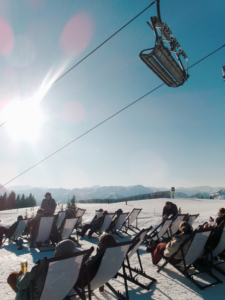
Kitzbühel’s après scene feels far more communal and energetic. People gather in mountain huts and outdoor terraces while music plays loudly in ski boots and winter sweaters.
You’re just as likely to see:
- champagne tables
- ski instructors dancing
- families eating schnitzel
- groups singing along to Austrian songs
- glamorous Europeans standing on tables
The Pace Feels Different
American ski trips can sometimes feel highly scheduled:
- maximize ski days
- get first chair
- rush reservations
- optimize every run
- plan transportation carefully
Kitzbühel encourages lingering!
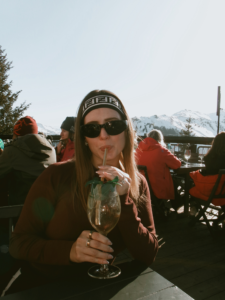
Long lunches on the mountain aren’t considered “wasting ski time.” You should sit at a sunny terrace for two hours with wine and traditional Austrian food- it’s part of the experience.
People ski differently too. There’s often less obsession with vertical feet and performance metrics. The mountain is integrated into lifestyle rather than treated like a competitive sport.
Even the terrain flow feels different. European ski culture encourages exploration between villages, huts, and interconnected regions rather than repeatedly skiing the same peak.
History Is Everywhere
One thing American ski towns simply cannot replicate is centuries of alpine history.
Kitzbühel’s roots date back hundreds of years. You feel that history constantly:
- church bells echoing through town
- fresco-painted buildings
- narrow winding streets
- traditional alpine architecture
- historic hotels filled with old photographs and racing memorabilia
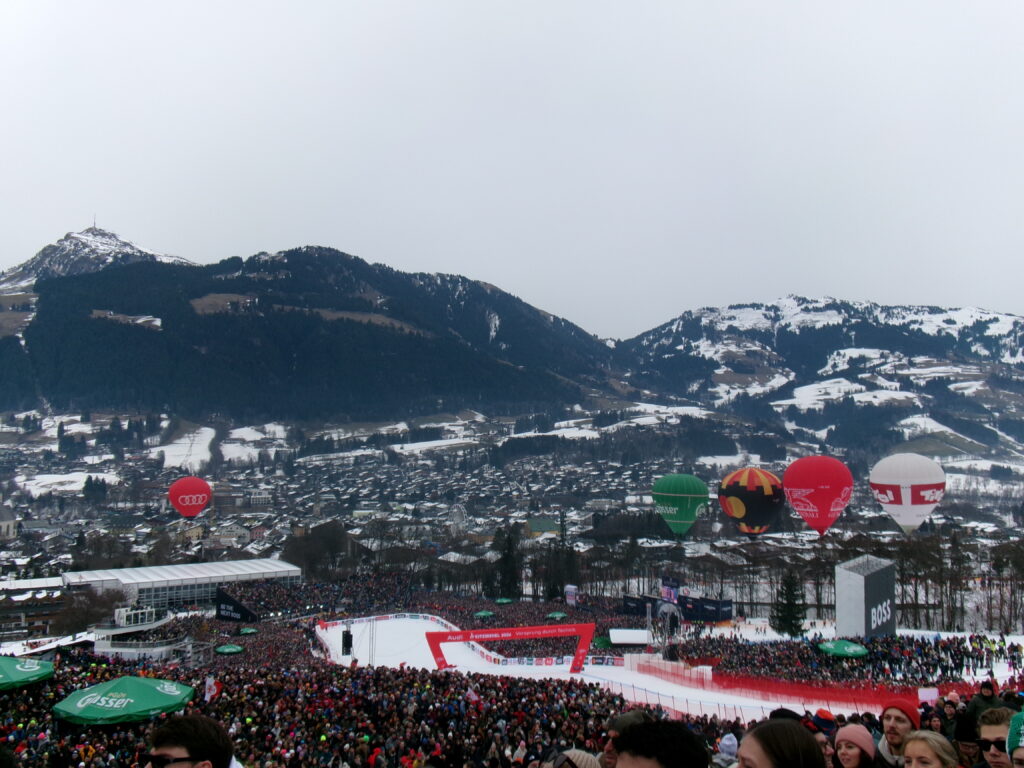
Then there’s the legendary Hahnenkamm Races.
The Streif downhill course is one of the most iconic and intimidating races in alpine skiing. During race week, Kitzbühel transforms into an electric mix of elite sport, European society culture, and alpine tradition.
The event feels less commercialized than many major American sporting events. Even if you’re not deeply into ski racing, you can sense how much history matters here!
Food Is Part of the Experience
Food culture might honestly be one of the most underrated differences between European and American ski towns. In many U.S. resorts, the on-mountain dining can feel expensive, rushed, or overly casual. The focus is often on convenience.
In Kitzbühel, lunch on the mountain can become one of the highlights of the entire trip!
You’ll find:
- Kaiserschmarrn
- schnitzel
- glühwein
- fresh soups
- Austrian wines
- beautiful mountain huts with full table service
People sit down for real meals. Wine at lunch is normal. The tables are social. The dining feels woven into alpine culture rather than treated as a quick break before the next lift.
Europeans Treat Skiing More Casually
Ironically, Europeans often take skiing less seriously while also being far better at it.
In America, skiing can sometimes feel intense:
- expensive gear culture
- performance focus
- optimization
- athletic identity
- destination pressure
In Austria, skiing feels more integrated into normal life.
Children grow up skiing. Families ski together casually. Elderly people ski confidently into their seventies and eighties. It doesn’t feel like an elite hobby in quite the same way.
That creates a more relaxed atmosphere overall. People care less about proving themselves on the mountain and more about enjoying the day.
If this post made you excited about planning your next trip and want it to feel organized, intentional, and stress-free, I offer custom itinerary planning services rooted in years of luxury travel experience. Click HERE to learn more about working together!
The Style Is Different
This deserves its own section because honestly, Kitzbühel may have some of the chicest ski culture in the world.
American ski style tends to lean more:
- technical
- sporty
- performance-oriented
- outdoorsy
Kitzbühel style leans:
- tailored
- glamorous
- alpine heritage-inspired
- effortlessly luxurious
You’ll see:
- perfectly fitted ski suits
- vintage-inspired knitwear
- fur-lined boots
- cashmere layers
- neutral palettes
- beautifully styled winter accessories
And somehow people still look practical!
The aesthetic influence from nearby cities like Munich, Vienna, and Milan is very obvious. Kitzbühel sits at the intersection of sport, fashion, and European social culture in a way American ski towns rarely do.
Final Thoughts: Why Kitzbühel is Unforgettable
What makes Kitzbühel so unforgettable isn’t just the skiing, the hotels, or even the famous après scene. It’s the feeling that the town has remained deeply connected to its identity while so many luxury destinations around the world have become increasingly “manufactured”.
Kitzbühel doesn’t feel like a ski resort created for tourists. It feels like a real alpine town that simply happens to welcome visitors into its way of life.
There’s a natural elegance to everything there. Long lunches on sunny terraces. Fur-lined boots clicking through cobblestone streets. Families gathering for après after a day on the mountain. Historic hotels filled with stories and tradition. Nothing feels rushed, overly curated, or designed purely for social media.
And that’s exactly why it leaves such an impression!
For more travel tips, destination guides, and realistic advice for traveling while working full-time, head over to my blog page and start planning your next trip today ✈️
This post contains links to affiliate websites, and I may receive an affiliate commission (at not cost to you!) for any purchases made by you using these links. I appreciate your support!
the Newsletter
Love ski travel and thoughtfully planned trips?
Subscribe for my FREE Travel Planner Download!
PLUS monthly emails with insider ski tips, packing edits, and travel guidance you won’t always find on the blog.