
How to Look Like a Pro While Skiing (Even If You’re Not)
I’ve been skiing since I was two years old. I grew up on skis (I actually don’t remember learning to ski), competitively ski raced at an international level for over 15 years, and today, I still ski 20+ days a season across various ski resorts, countries, and conditions.
I also feel like I look like I know what I am doing, and not to sound cocky since this is the first paragraph you are reading of this blog post (lol), but I also know what I am doing while skiing since I’ve been skiing since I remember.
And here’s what most people don’t realize when they are learning to ski:
Looking like you know what you’re doing on skis has very little to do with how aggressive or fearless you ski.
You don’t need to ski double blacks, charge moguls, or look like you’re training for the World Cup to look like you know what you are doing while skiing, you just need to avoid the small mistakes that quietly scream “I’m new to skiing!”
Disclaimer!!: This guide is not about gatekeeping ski culture or saying you are bad at skiing if you don’t do these things. It’s about helping you feel more confident, more comfortable, and more like you belong on the mountain whether you ski once a year or are out there every weekend!
Also, hi there! My name is Sydney and welcome to my blog, The Après Society! I cover a variety of travel and skiing related topics, as these are my passions in life, and I am so excited and fulfilled to be writing about them. I hope this blog makes your life just a little bit better either with travel hacks, outfit inspiration, or just pure entertainment.
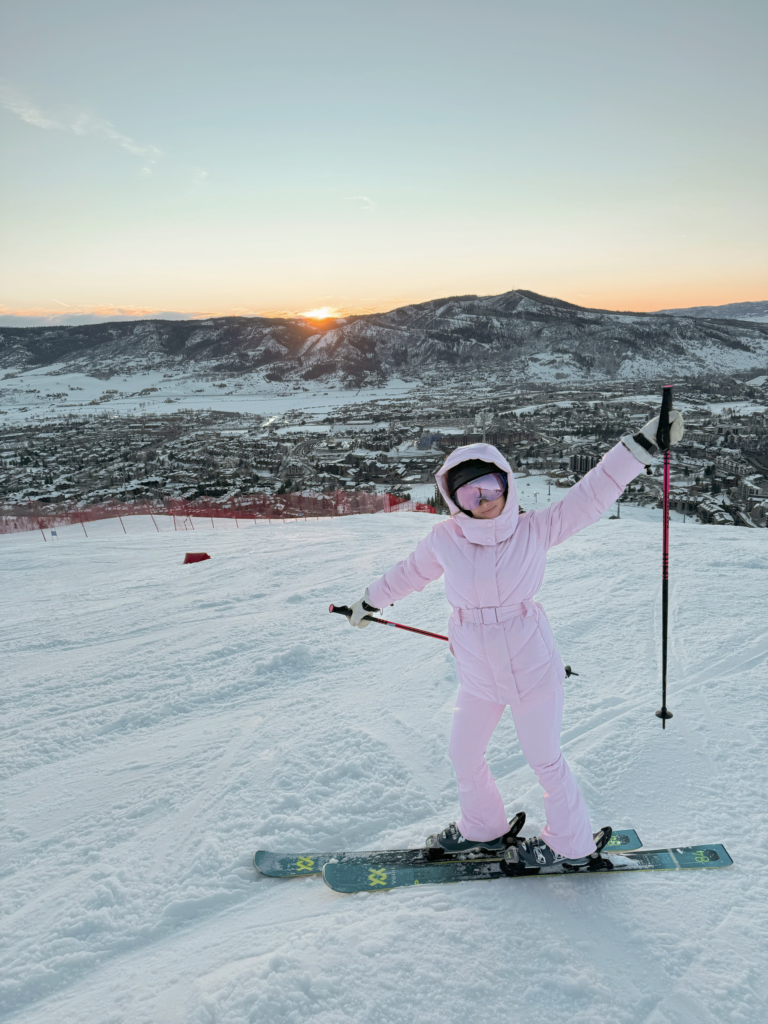
First Things First: Confidence Comes From Comfort
If there’s one thing you take away from this entire post, it’s this: if you’re uncomfortable, everyone can see it! And more importantly, you can feel it while you’re out skiing.
Cold feet make you tense up. Foggy goggles make you anxious because you can’t see where you are going. Pants that don’t fit right change how you stand and how you turn. When something feels off, your body starts overcompensating, and that’s usually what makes people look unsure or stiff.
The skiers who look the most confident are almost always the ones who aren’t thinking about their gear anymore. Everything feels dialed in, so they can just ski.
Socks
Cold feet are almost investible during skiing so the socks you choose DO MATTER! I exclusively wear Smartwool ski socks, and no, this is not sponsored (I wish!). Smartwool truly just has the best socks for skiing. They keep you warm without feeling too bulky.
Base Layers
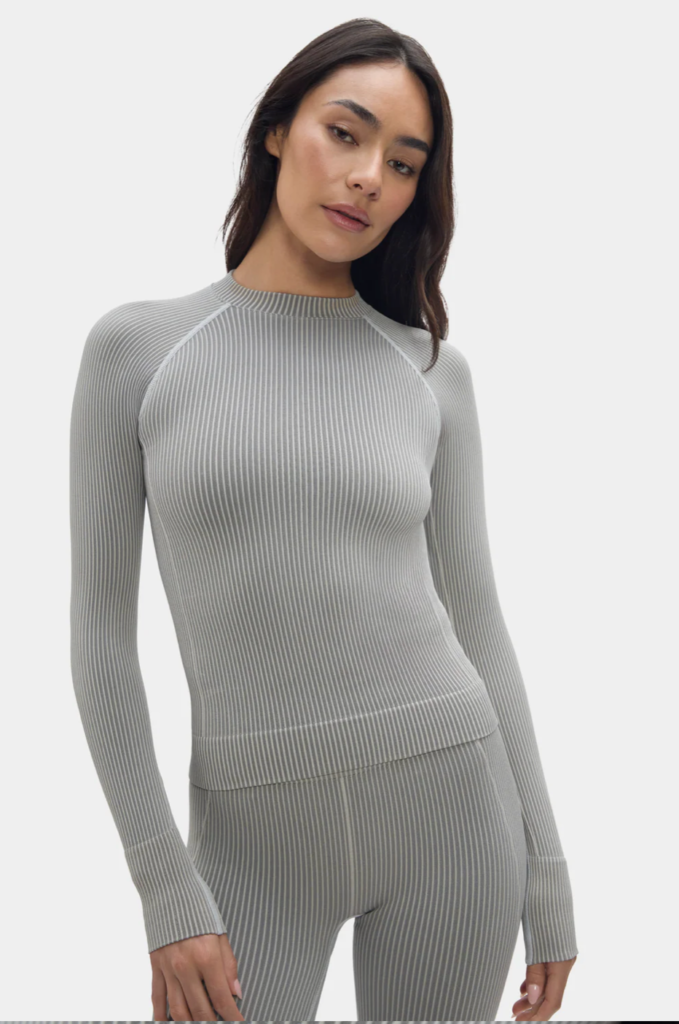
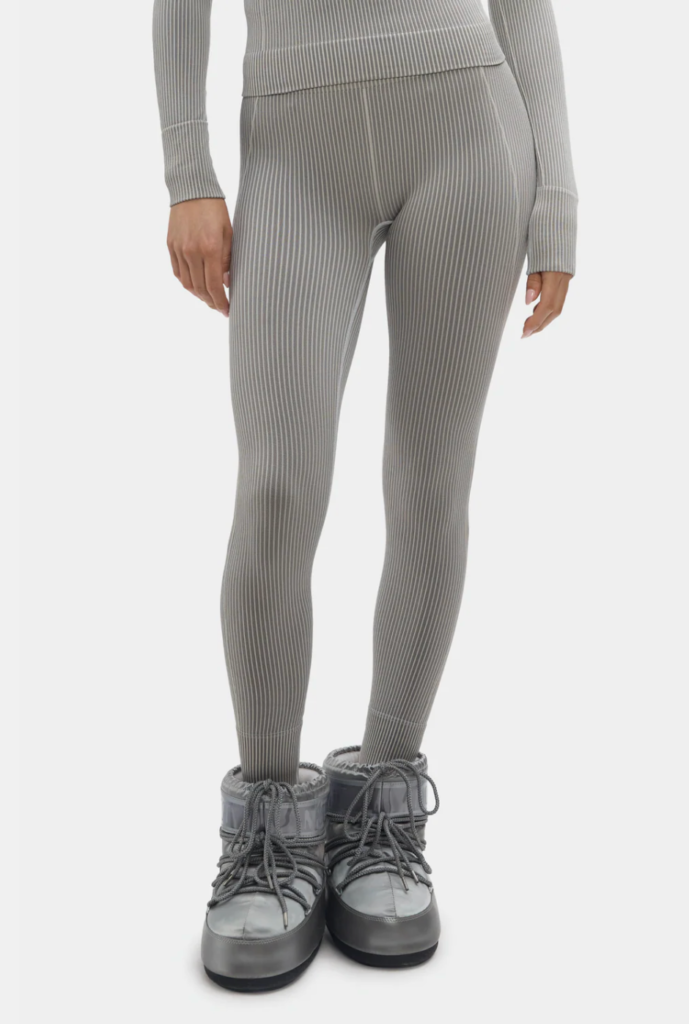
Base layers are arguably the second most important part of feeling comfortable and looking like you know what you are doing while skiing. While I am not as tied to a specific brand of base layers, I do look for similar materials. I look for merino wool, and if it’s not merino wool, I look for materials designed for cold temperatures. Halfdays has a great selection of quality base layers. Loving this base layer top and base layer bottom from their Winter 2026 line. Also, you do not need a million different sets. I rotate between 4 sets (and I’m an avid skier).
Helmet
Helmets also majorly contribute to your comfort and how to look like you know what you are doing while skiing. Many helmets have soft shell ears, meaning the plastic part of the helmet does not extend over the ears. If these don’t fit well, well… your ears can get quite cold! On the higher end, you have POC helmets. I have this helmet and love it.
Other brands that make quality helmets are Giro and Smith. I like these two helmets from Giro and Smith respectively.
The Tiny Visual Things That Immediately Give You Away
There are a few details on the mountain that experienced skiers can tell instantly if you are inexperienced, even if they’d never say it out loud. And this guide is about making sure you aren’t who they are noticing.
The biggest one? Goggle gap.
Goggles
What’s a goggle gap, you say? A goggle gap is that little strip of exposed forehead between your helmet and goggles. I am sorry to say but this is biggest dead giveaway of a beginner skier, and it’s also just miserable in real ski conditions. Wind, snow, cold… all hitting bare skin? NO THANK YOU!
Goggle gap usually happens when goggles and helmets don’t work well together. That’s why a lot of seasoned skiers buy them from the same brand or at least try them on together.
When they fit properly, they create a clean seal and you never think about them again. Which is exactly the point!
Another subtle but very real tell is what you do with your goggles when you’re not actively skiing.
Letting them dangle off the back of your helmet might feel convenient, but it almost always looks sloppy and usually ends with scratched lenses. Most experienced skiers either wear their goggles on their face or push them neatly up onto their helmet for short breaks.
Wear Snowpants!
And yes, we do have to talk about jeans. This might seem self explanatory, but I still occasionally see it. Jeans are never the move. Not for “just one run,” not for trying it out, not for spring skiing. They get wet instantly, they’re freezing, they restrict movement, and they stand out in the worst way.
Also, while we are talking about this, just wear the snow pants. Don’t even ski in sweatpants. Proper ski pants don’t have to be fancy or expensive, they just need to be made for snow and you are already looking like a pro and like you know what you are doing while skiing.
Fit > Brands > Trends
One of the biggest misconceptions in ski style is that expensive or trendy gear automatically makes you look experienced. It doesn’t. Fit does!
In fact, sometimes having the expensive designer ski outfits makes me think you don’t know what you’re doing.
Oversized gear that looks borrowed or baggy in the wrong places doesn’t read as cool or expert, it just looks uncomfortable. On the flip side, super tight outfits that prioritize aesthetics over movement usually look restrictive once you actually start skiing.
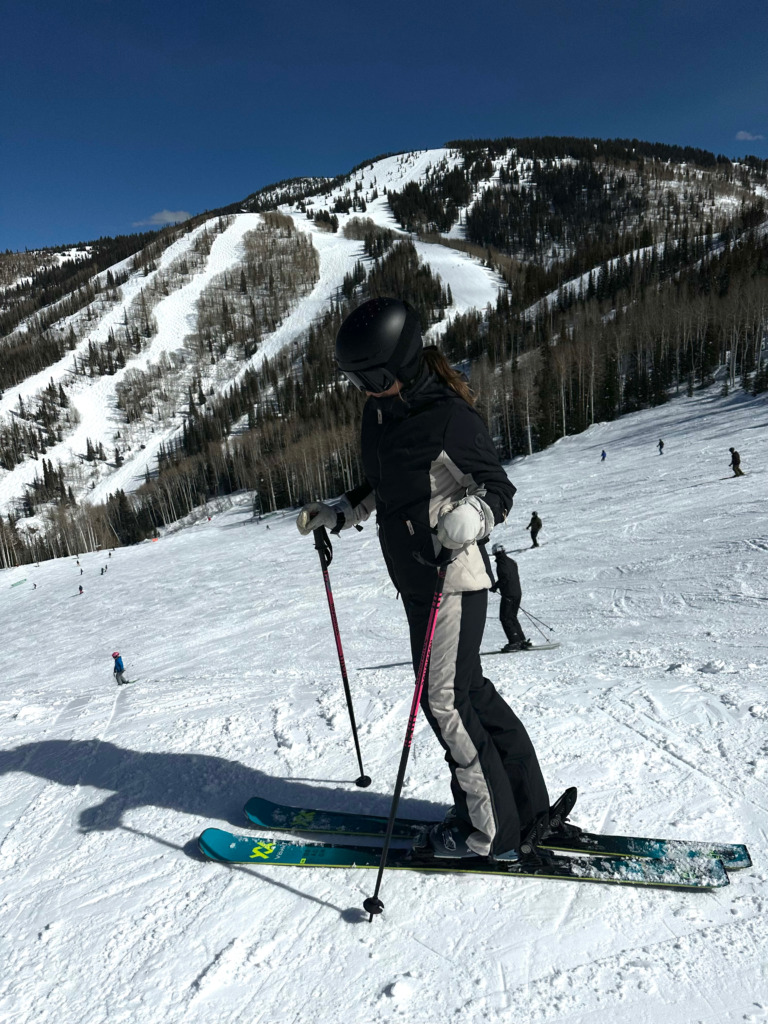
Most skiers who’ve been doing this for a long time wear things that fit their body, move with them, and don’t need constant adjusting. When you bend your knees, nothing pulls awkwardly. When you lift your arms, your jacket doesn’t ride up. Your pants sit cleanly over your boots without bunching everywhere.
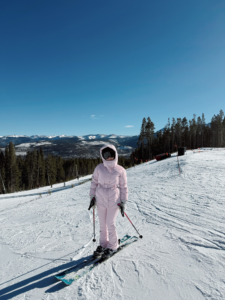
Oh yes, please, make sure your snow pants go over your ski boots! Tucked in, skinny, snow pants are a dead giveaway you are a beginner.
There’s also a line when it comes to styling. Looking put together is great! Looking overly done up usually feels out of place on the mountain. Heavy makeup, styled hair spilling out of helmets, or outfits that look more Instagram than functional tend to stand out, and I hate to say it, not in a good way.
The vibe you’re going for is effortless! Like you’re here to ski first and everything else is secondary. But you also can look good when done right!
How You Act on the Mountain Matters Too
Looking like you know what you’re doing isn’t just about skiing downhill or having the right outfit. It’s how you move through the whole day.
Lift Lines
In lift lines, experienced skiers tend to be calm and efficient. Alternate between lift lines if the lift is feeding in from different lanes. Also, allow singles to join you if the line is long.
Skis are parallel, poles are under control, movements aren’t frantic. When getting off the lift, it is a courtesy to ask the other people which direction they are turning when they get off so you don’t collide.
Carrying Skis
When carrying your skis in the village, here’s how to carry them like you know what you are doing.
Over the shoulder is the preferred way. To prevent them from sliding around, put them on your shoulder so that the ski stopper on the binding catches the bottom ski stopper so they don’t slide forward. Place the ski on your shoulder just above where the binding starts. Then, wrap your arm around the outside of the ski and place you hand near the tip of the ski for extra control.
This makes carrying skis look balanced, not awkward or noisy.
In the Lodge
Inside the lodge, there’s also a bit of an etiquette. Boots get unbuckled slightly, not completely, to give your feet a break. Just flip up the buckles, but don’t take them off the hooks completely.
When it’s time for après, helmets and goggles come off, boots come off, and layers shift into something more comfortable.
None of this is about trying to look cool. It’s about being used to the flow of a ski day.
The Ski Technique That Makes You Look More Confident Instantly
You don’t need perfect form to look like you know what you’re doing, but a few technical habits make a huge difference.
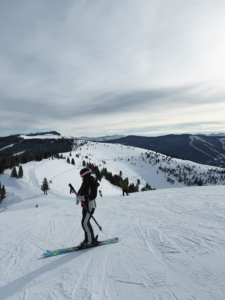
One of the biggest is hand position. Letting your hands drop behind you pulls your weight back and makes you look off-balance. Keeping your hands up and in front of you — around chest height — helps keep your body centered and your movements smoother.
The key to skiing in control is to have pressure on the front of your boot. As soon as you get in the backseat (which feels more comfortable), you are more out of control.
Your stance matters too. Good skiing posture is a strong, athletic stance. Knees bent, ankles flexed, chest slightly forward. If you’re standing straight up or leaning back, this is that backseat position I was talking about and it makes skiing harder than it needs to be.
When you turn, most of your pressure should be on the outside ski. You don’t have to think about it constantly, but understanding that concept helps your turns look smoother and more controlled. The inside ski supports; the outside ski does the work.
This is the basis to carving, but if you are just starting out, focus on and 80/20 split in pressure between the outside ski and inside ski when turning.
And above all else: smooth beats aggressive every time. Flailing arms and sudden movements usually mean someone is fighting their skis. Calm, fluid skiing, even at slower speeds, this almost always looks more confident!
Knowing When Not to Push It Is a Flex
One of the biggest signs of an experienced skier is someone who knows their limits and respects them!
They don’t ski a black diamond or mogul-covered run just because everyone else is. Know your limits, and that will make you look like you know what you are doing while skiing! You got this!
There’s nothing confident about being miserable or scared just to prove a point. Being able to say “not today” is actually one of the most seasoned moves there is. Heck, I still do this!
As a former racer, my bread and butter is groomers. But, since I grew up in the Midwest, I do not know how to ski powder or tree in Colorado (where I live now). There are plenty of days where I just say I’ll take the groomer down and avoid the moguls.
Après Ski Is Part of the Vibe
A lot of people undo all their cool, relaxed energy at après by staying in full ski mode for too long.
When the lifts close, experienced skiers shift gears. Boots come off. Helmets and goggles come off. Layers get adjusted so you’re comfortable, warm, and social.
I love bringing a winter headband and some sunglasses to switch to the après ski vibe.
You don’t need a dramatic outfit change! Just enough of a transition that it makes sense for where you are.
If this post made you excited about planning your next trip and want it to feel organized, intentional, and stress-free, I offer custom itinerary planning services rooted in years of luxury travel experience. Click HERE to learn more about working together!
Final Thoughts: The Ski Guide
At the end of the day, looking like you know what you’re doing while skiing really isn’t about perfection! It’s not about skiing the hardest runs, having the newest gear, or trying to prove anything to the people around you. Most of the time, it’s simply about being comfortable enough to relax and enjoy the day!
All of the little details matter because they affect how you feel. When your socks are right, your goggles fit, your outfit moves with you, and your stance feels natural, you stop thinking about how you look and start focusing on how the day feels. And once you’re out of your head, confidence follows naturally.
It’s also worth remembering that everyone starts somewhere. Every experienced skier was once cold, awkward, or unsure. Learning what works for you and letting go of the rest is part of the process, and that process never really ends, even after years on skis.
So don’t overdo it, and you got this!
For more travel guides, view my blog page.
This post contains links to affiliate websites, and I may receive an affiliate commission (at not cost to you!) for any purchases made by you using these links. I appreciate your support!